Dog nails attract confident misinformation. The claims sound plausible, they get repeated at dog parks across Richburg, and some of them quietly produce long nails, sore feet, and dogs that dread trim day. This piece sorts the common ones into true, false, and it depends, starting from the anatomy nobody argues with: a nail is a hard shell around a living quick, and the quick grows and recedes with the length you keep.
| Claim | Verdict | What is actually going on |
|---|---|---|
| Walking on pavement files nails down enough | It depends | Hard surfaces wear nails somewhat, and a dog doing long daily sidewalk miles may need trims less often. Yard and carpet dogs get almost no wear. Check the clicking test on a hard floor rather than assuming. |
| If you trim often, the quick shrinks back | True | The quick recedes gradually when nails are kept short on a steady rhythm, commonly every three to four weeks. That is the whole reason frequent small trims beat rare big ones. |
| Black nails cannot be trimmed safely | False | They cannot be trimmed by sight alone. Thin slices reveal the cut surface changing toward a soft dark center near the quick, and grinding gives fine control. Black nails take longer, not luck. |
| Long nails are only a cosmetic issue | False | Long nails tip the foot back, splay the toes, and change how joints load with every step. Over months and years that altered gait is a comfort and soundness issue, especially in older dogs. |
| Cutting the quick once ruins a dog for trims | It depends | One nick, handled calmly with styptic powder and an easy end to the session, is usually forgotten. Repeated painful cuts, or a wrestling match afterward, are what build a lasting fear. |
| Dewclaws take care of themselves | False | Dewclaws never touch the ground, so nothing wears them. Left alone they curve, and a fully curled dewclaw can grow into the pad. They need trimming on the same schedule as the rest. |
| A grinder is always gentler than clippers | It depends | Grinding avoids the squeeze and the risk of one deep cut, but the noise and vibration upset some dogs more than a quick, quiet clip. The gentler tool is the one your dog accepts calmly. |
The schedule underneath all the myths
Strip away the folklore and one fact does most of the work: nails grow continuously, the quick follows length, and time is the variable you control. A trim every three to four weeks keeps nails short with tiny, low stress cuts. Stretch it to two or three months and each session becomes longer, closer to the quick, and more likely to include the nick that starts a fear. Owners who swear their dog has always hated trims usually own a dog on the long interval, and the hatred and the interval keep causing each other.
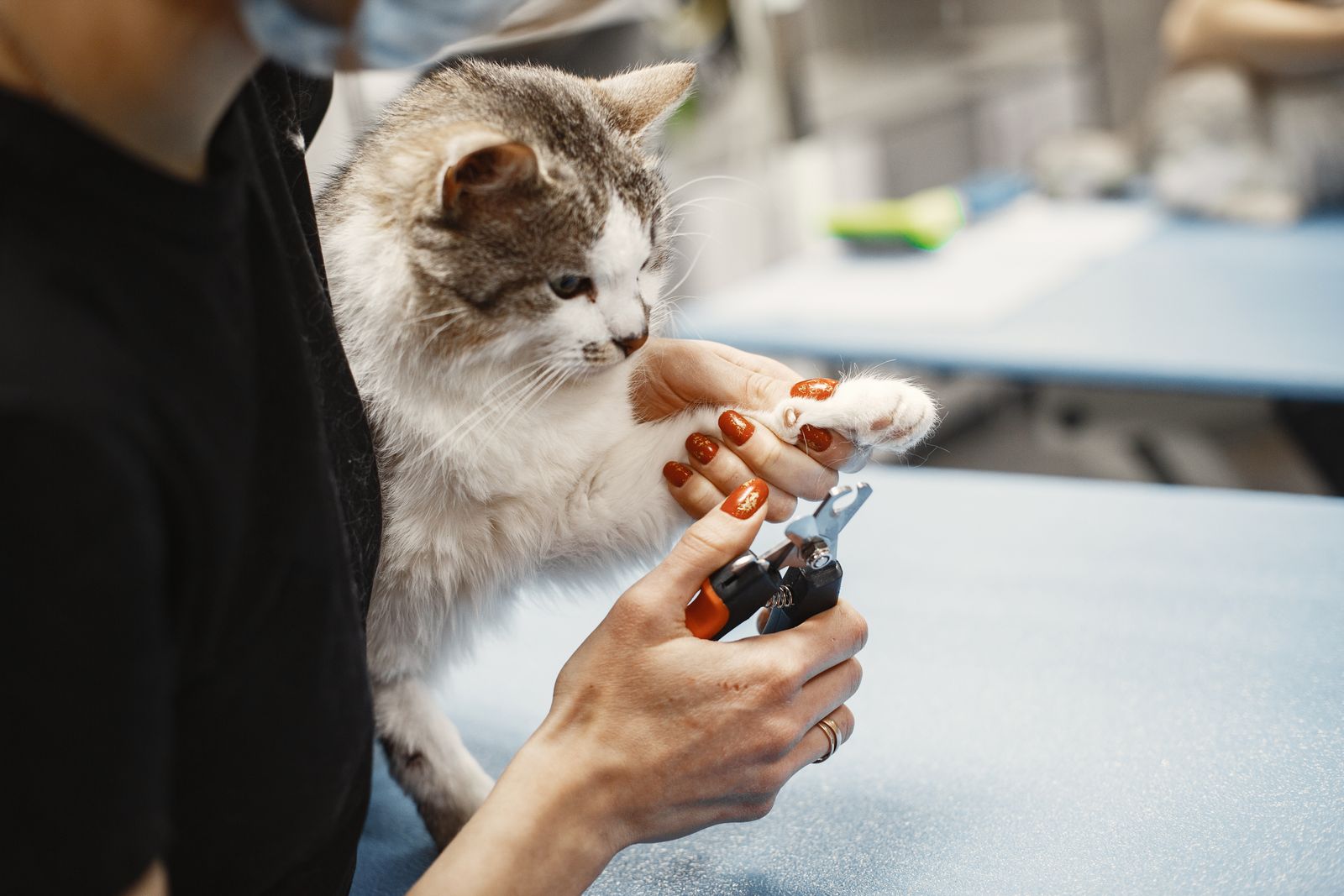
One more claim deserves a footnote, because cats wander into this conversation at grooming salons that serve both. Cat claws are not small dog nails; they are retractable, shed their outer sheaths, and are trimmed to a blunt tip rather than shaped. Owners who trim both species at home do well to keep the tools and the expectations separate, and to let the salon handle any animal that objects seriously to the process.
Senior dogs tighten the schedule further. They walk less, wear less, and grow thicker, harder nails that split if they get long. Many do best on grinding every three weeks, which handles hardness without the crush of clippers.

At Pawsitively Purrfect Pet Grooming, nail trims are part of regular dog grooming visits, and a quick nail-only stop between grooms is the simplest way to stay on the short interval. Sort the myths once, keep the calendar, and trim day becomes the least interesting appointment in your dog's life, which is exactly what it should be.
Common questions
How short should nails be, ideally?
Short enough that they do not click on hard floors and do not touch the ground when the dog stands normally. If you can hear them indoors, they are already longer than ideal and the quick has likely followed.
Can long nails be fixed in one visit?
Only partly. The quick limits how much can come off safely at once. The standard fix is trimming to the safe point every week or two, letting the quick recede in stages until the nails reach a healthy length.
Should I trim my dog's nails myself or have it done?
Either works if the dog stays calm and the trims actually happen on schedule. Owners who dread it tend to postpone it, and postponement is the real problem, so many hand the job to the groomer without a second thought.
Photos in this guide are representative stock images.
← All guides from Pawsitively Purrfect Pet Grooming← Back to Pawsitively Purrfect Pet Grooming